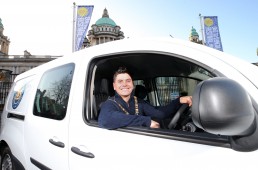
Belfast City Council has introduced 12 new electric vehicles which will be used in parks across the city.
It’s part of the council’s plans to review its vehicle fleet, with long-term ambitions set for transition to low carbon transport options in the future.
Lord Mayor of Belfast Councillor Daniel Baker said:
“Climate change has reached a point where we need to make urgent and concerted efforts to understand and prepare for its impact.
“Our goal is to transition Belfast to an inclusive, low carbon, climate-resilient economy within a generation, so there is work to be done.
“Today sees us take another step on that journey with the introduction of these new electric vehicles which will be trialled in our parks.”
Climate is one of three key areas for action in the council’s draft resilience strategy, with children and young people, and connectivity being the other areas of focus.
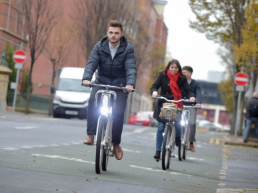
Some of the actions outlined in the draft strategy document include significantly improving levels of tree planting across the city, reducing commuters’ dependency on cars, improving air quality, and developing a ‘green’ policy for the city’s festivals and cultural sector.
To find out more, and to share your views on the draft strategy, visit www.belfastcity.gov.uk/resilientbelfast